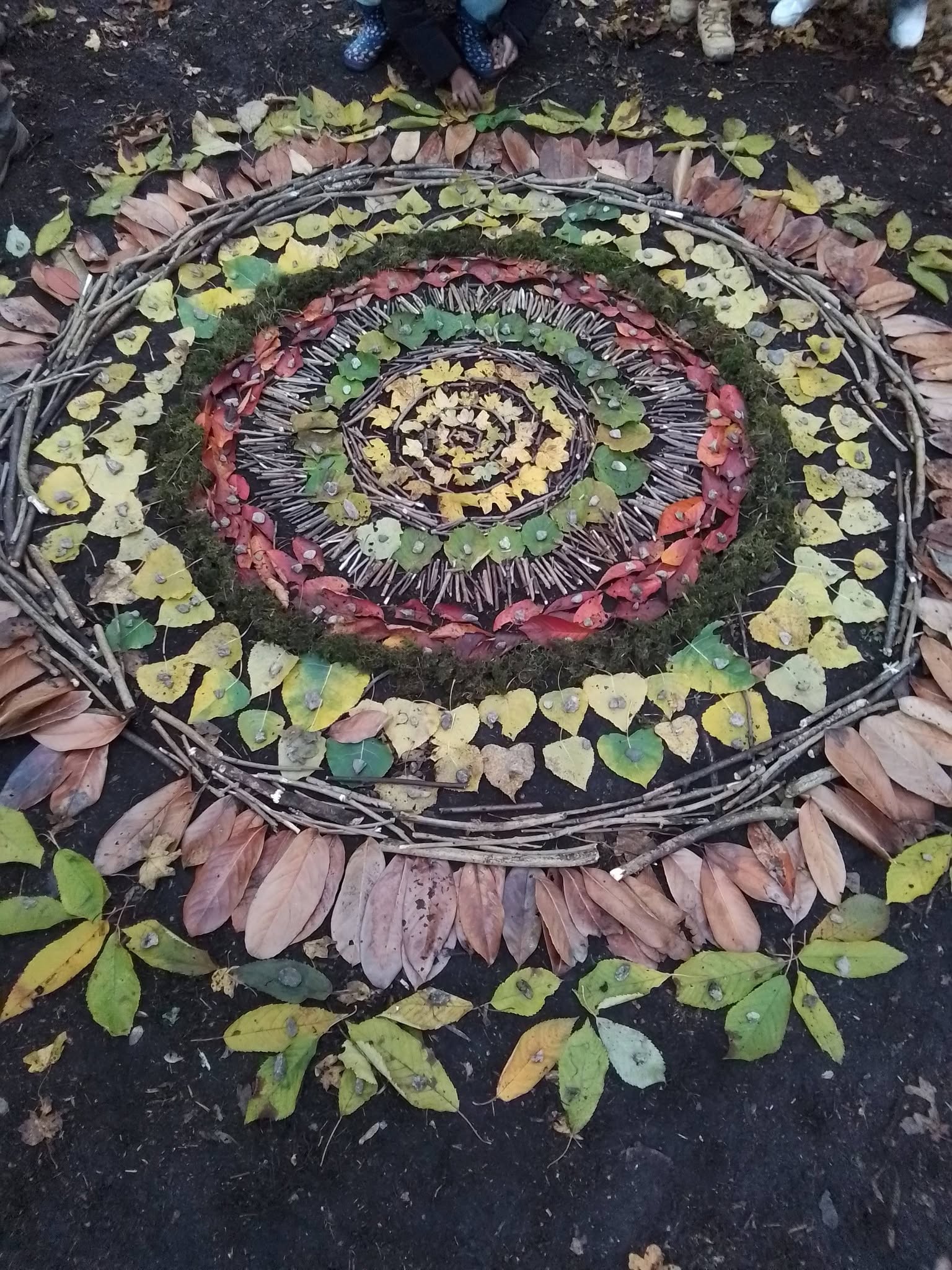
Year 2 and Reception pupils at Wallbrook Primary Academy took their learning outdoors for a creative workshop with visual artist James Brunt, discovering how everyday natural materials could be transformed into works of art.
Working in the Academy’s outdoor learning area, the children collected leaves, sticks and other natural materials before using them to create their own pieces of land art.
Experimenting with patterns, shapes and arrangements, pupils explored how simple materials could be brought together to create individual designs. The activity encouraged them to look more closely at their surroundings and consider the different ways patterns and textures could be found in the natural environment.
The workshop formed part of the Academy’s Explore, Excite, Excel (E3L) theme, Worth Repeating, which explores the patterns found in nature and the world around us. The cross-curricular theme gives pupils opportunities to investigate symmetry, explore rhythm and discover how artists use patterns and natural materials in their work.
Brunt is known for his distinctive land art installations, created using natural, foraged and found materials. His work celebrates the relationship between art and the environment, with projects and collaborations spanning schools, festivals and events across the UK and internationally. Throughout his career, he has also developed creative projects that use the arts to support wellbeing, build confidence and bring communities together.
School Principal, Lorna McGregor, commented: “It’s important that children have opportunities to do more than simply look at art. They need the chance to experiment, try things for themselves and develop confidence in their own ideas.
“Working with James gave pupils a different way to think about what art can be and where ideas can come from. Using materials found in the natural environment challenged them to look at familiar things differently and showed them that creativity doesn’t depend on having specialist equipment or materials. It was particularly valuable to see the children take the same starting point and come up with such individual ideas and interpretations.”
The visit provided a practical opportunity for pupils to connect their classroom learning with the world around them, while seeing how artistic ideas can take shape in unexpected ways. It also offered a fresh perspective on the patterns found in nature, encouraging children to keep looking, questioning and finding inspiration in their everyday surroundings.